B2B Network Matching
We connect companies with the right companies — so projects involving multiple trades can be offered as a stable service network. The goal is not “more contacts,” but better fit.

What this is about
In many projects, multiple services are requested at the same time.
A single company often cannot cover everything — and loses jobs as a result,
even though the core service is very strong.
B2B network matching means: we deliberately add the missing piece,
so the company can present itself as an “all-in-one provider” —
without artificially inflating its own structure.
Example: interior finishing without windows
A drywall company handles interior finishing, painting and masonry work — but not window work. In real inquiries, these often come together.
- Window installer (installation/adjustment)
- Tiler (bathroom/kitchen/transitions)
- Plumbing/heating (pipes, installation, repair)
- Electrician (feed lines, connections, approvals)
- Roofer (if remodel/connection areas are affected)
The effect is simple: the service portfolio becomes larger and more robust. This increases the likelihood that an inquiry turns into a job — because the customer does not have to coordinate multiple providers.
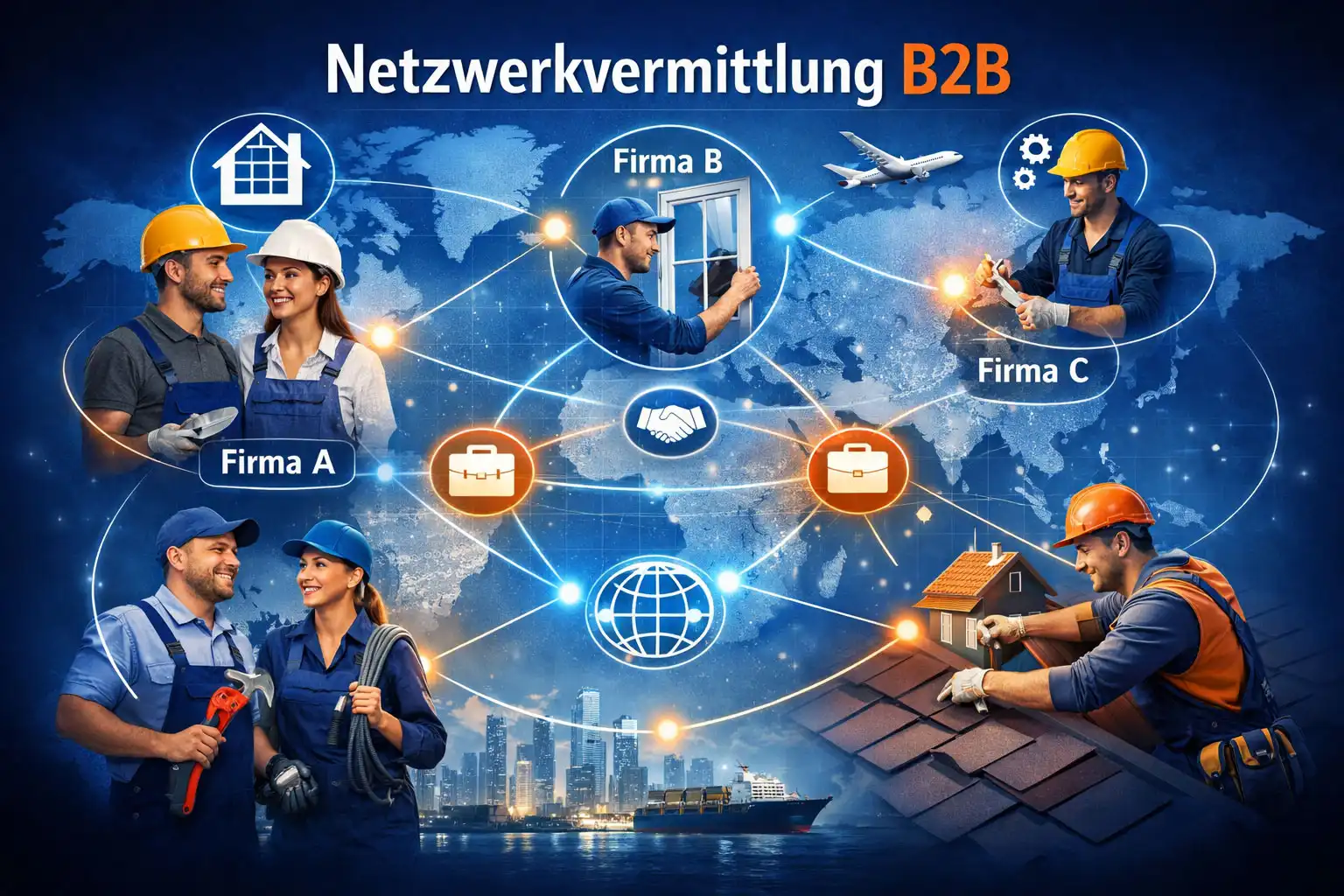
How the matchmaking works
- 1) Profiling: service, target customers, regions, capacities, quality standard.
- 2) Match: complementary trades and clear responsibilities (no overlap).
- 3) Introduction: structured first contact + expectation alignment (process, handoffs, communication).
- 4) Follow-up: feedback, adjustments, stabilization for recurring projects.
Typical use cases
Expand services
Close gaps without hiring. Partners cover complementary trades — so offers become complete.
Higher close rate
When multiple services are required, the provider who can coordinate cleanly often wins. Suitable partners increase the likelihood of closing.
More predictable utilization
Recurring collaboration reduces friction: clear handoffs, clear responsibilities, less downtime.
National & international
Matching is not limited to one location. What matters is fit in service, quality and availability.
What we are — and what we are not
- We are referrers: fit-oriented connection of companies.
- We create structure: roles, expectations, handoffs, communication.
- We are not execution: contract, pricing and liability remain with the companies.